Thursday, Nov 26

Christmas Kitchen Food Safety: 7 Checks Before the Party Rush
December is when good kitchen habits get tested. Bigger bookings, bigger batches, full fridges and new faces on the rota all arrive at once. These seven checks help you stay ahead of it.
The seven checks use the figures for Northern Ireland, England and Wales. In Scotland or the Republic of Ireland, read the differences first.
1. Check your fridge space before the deliveries land
An overstuffed fridge struggles to hold temperature. Chilled food that needs temperature control must be kept at 8°C or below by law, with limited exceptions. Aim for 5°C or below.
- Plan where the extra stock will go before you order it.
- Keep raw meat and poultry below and apart from ready-to-eat food.
- Check temperatures more often on busy days.
- Know what you will do if a freezer fails.
2. Plan your turkey defrost
Large birds take far longer to defrost than people expect. Work backwards from service, using the supplier’s instructions.
- Defrost in the fridge, in a tray that catches the juices.
- Check there is no ice left in the centre before cooking.
- In Northern Ireland, Safe Catering says to use food within one day of defrosting.
3. Probe it, don’t guess
Colour and cooking time are not enough for a big joint or a full tray. Probe the thickest part.
- England and Wales: the standard advice is 70°C for 2 minutes, or an equivalent, such as 75°C for 30 seconds.
- Northern Ireland: Safe Catering uses 75°C or hotter.
Clean and disinfect the probe before and after each use.
4. Cool batch food quickly
Turkey, ham, gravy, stock and soup are often cooked ahead. Cool them as quickly as possible, then chill them. Northern Ireland’s Safe Catering says to get food into the fridge, blast chiller or freezer within two hours. Large joints and whole birds need extra planning.
- Split big batches into smaller portions or shallow trays.
- Use a blast chiller if you have one, or an ice bath for pans.
- Record when cooking finished and when the food went into the chiller.
5. Reheat properly, and only once
Reheating means cooking again, not warming up. Food must be steaming hot all the way through, and reheated only once. In Northern Ireland, use Safe Catering’s 75°C or hotter as your probe target.
6. Put a clock on buffets and carveries
| Food | Keep it | If that isn’t possible |
|---|---|---|
| Hot | 63°C or above | Below 63°C for up to 2 hours, once. Then cool quickly to 8°C or below, or throw it away. |
| Cold | 8°C or below | Out of chilled storage for up to 4 hours, once. Throw away anything left after that. |
Label each platter with the time it came out. Don’t top up an old tray with fresh food.
7. Recheck allergens and brief temporary staff
Festive menus bring new recipes and suppliers. Check stuffing, sauces, gravy, desserts, dried fruit and drinks against current ingredient labels. Watch for gluten, milk, eggs, nuts, celery and sulphites.
- Update your allergen matrix before the menu goes live.
- Give allergen information in writing and talk it through with the customer. This is FSA best practice for non-prepacked food.
- Pre-order forms should capture allergies, and that information must reach the kitchen.
- Food prepacked for direct sale, such as boxed festive treats packed before ordering, needs the name and full ingredients with allergens emphasised.
- Train temporary staff before their first shift, and record it.
Working in Scotland or the Republic of Ireland?
The same seven checks are a useful plan, but some temperatures and rules change. Use the points below in place of the NI, England and Wales figures above.
Scotland
- Chilling: 8°C or below is recommended rather than set in law. CookSafe recommends 5°C or below for fridges and chills.
- Defrosting: CookSafe says to defrost thoroughly in a fridge, chill or cool area before cooking, unless the manufacturer says otherwise.
- Cooking: CookSafe gives 75°C or above as an example. Lower temperatures can work if held for long enough.
- Cooling: cool as quickly as possible, then refrigerate. CookSafe lets you set your own cooling time limit in your House Rules.
- Reheating: the law requires at least 82°C. There is a legal defence if that temperature would spoil the food, and CookSafe gives 70°C for 2 minutes as an example alternative. Reheat only once.
- Buffets: CookSafe says to hold hot food above 63°C. The 2-hour and 4-hour allowances in the table above are not set for Scotland. The law has its own exemptions, including for food exposed for sale. Set safe display limits in your House Rules.
- Allergens: information for non-prepacked food can be written or spoken. If it isn’t provided upfront in writing, tell customers clearly where to get it. Food Standards Scotland consulted on written information in 2026, so check for updates. Prepacked for direct sale labelling applies as described in check 7.
Republic of Ireland
The temperature points below come from the Food Safety Authority of Ireland (FSAI) guidance for caterers.
- Chilling: keep chilled food between 0°C and 5°C. Fridges set at 3°C or 4°C will generally do this.
- Defrosting: the fridge is the best place. Once food is fully defrosted, it’s best to cook it straight away.
- Cooking: the core should reach 75°C instantaneously, or an equivalent such as 70°C for 2 minutes.
- Cooling: if food won’t be eaten immediately, cool it as quickly as possible and get it into the fridge within 2 hours.
- Reheating: reheat only once, until piping hot, with a core of at least 70°C.
- Buffets: keep hot food above 63°C. Cooked food that isn’t stored above 63°C should be used within 2 hours of cooking. Don’t rely on the table above for cold food: the FSAI caterer page gives no 4-hour allowance. Agree your cold display limit in your food safety plan, and ask your environmental health officer if you’re unsure.
- Allergens: written allergen information is a legal requirement for non-prepacked food. It must name the allergens for each item and be easy to find before the sale, without the customer having to ask. Food packed on your premises for direct sale counts as non-prepacked, so these rules apply instead of the full-ingredients label described in check 7.
Your five-minute pre-service check
- Fridges and freezers checked and recorded
- Probe clean and working
- Defrost and cooling plan agreed
- Buffet timings assigned to a named person
- Allergen information matches today’s menu
- Everyone on shift knows who to ask
Keep the records when it gets busy
Paperwork is often the first thing to slip during a rush. Food Safe System lets your team log temperatures, deliveries and checks from a phone or tablet, so your records are in one place. Book a demo.
For the year-round basics, read our UK Kitchen Compliance Checklist 2026.
Book a demo
to see Food Safe System in action and get a tailored recommendation for your kitchen or group.
Not ready yet? See why more kitchens are going digital first.
Why Food Safe System
Stay Compliant. Avoid Fines. Save Time.
Food Safe System automates your food safety records—so you’re always inspection-ready, without the paperwork hassle.
-
📲 Log temperatures, deliveries & checks from any device
-
🔔 Get alerts before anything goes wrong
-
🔒 Secure, cloud-based records for instant access during inspections
-
📉 Reduce risk of fines and failed audits
👉 Start your free trial today and take the pressure off compliance.
- Usability
- Durability
- Operating System
- Speed

5/5
With 5/5 stars, we are calling Food Safe System a solid Investment
Related Articles
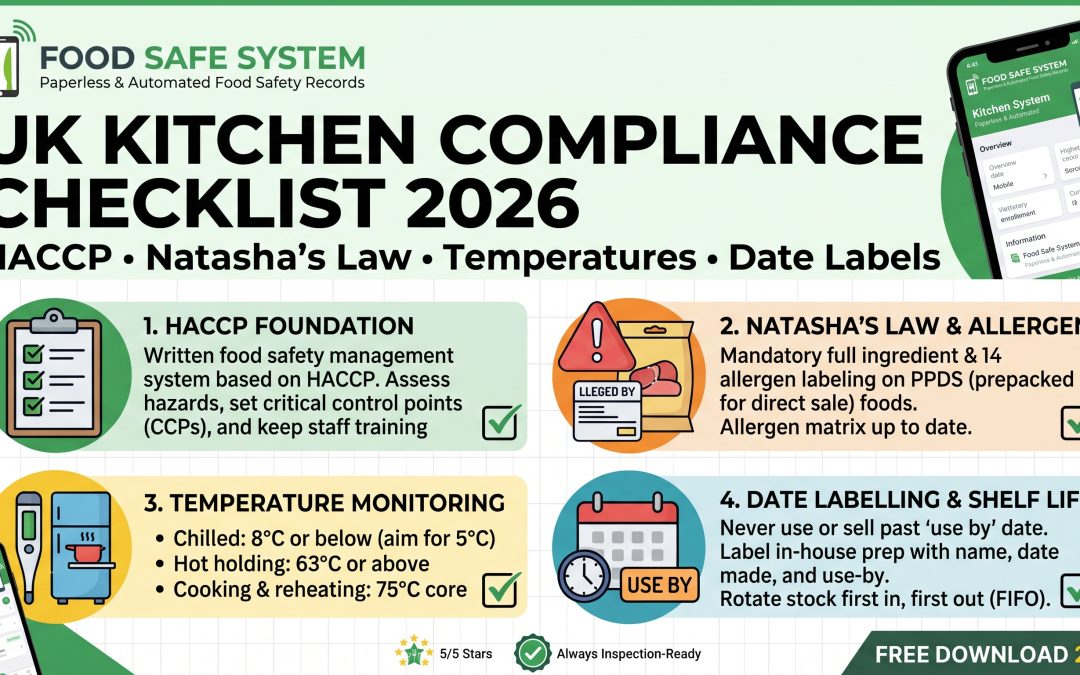
UK Kitchen Compliance Checklist 2026: HACCP, Natasha’s Law, Temperatures and Date Labels
What UK kitchens must have in 2026: HACCP, Natasha’s Law and allergens, temperature limits (8°C, 63°C, 75°C) and date labelling. Legal vs best practice, with a free printable checklist.
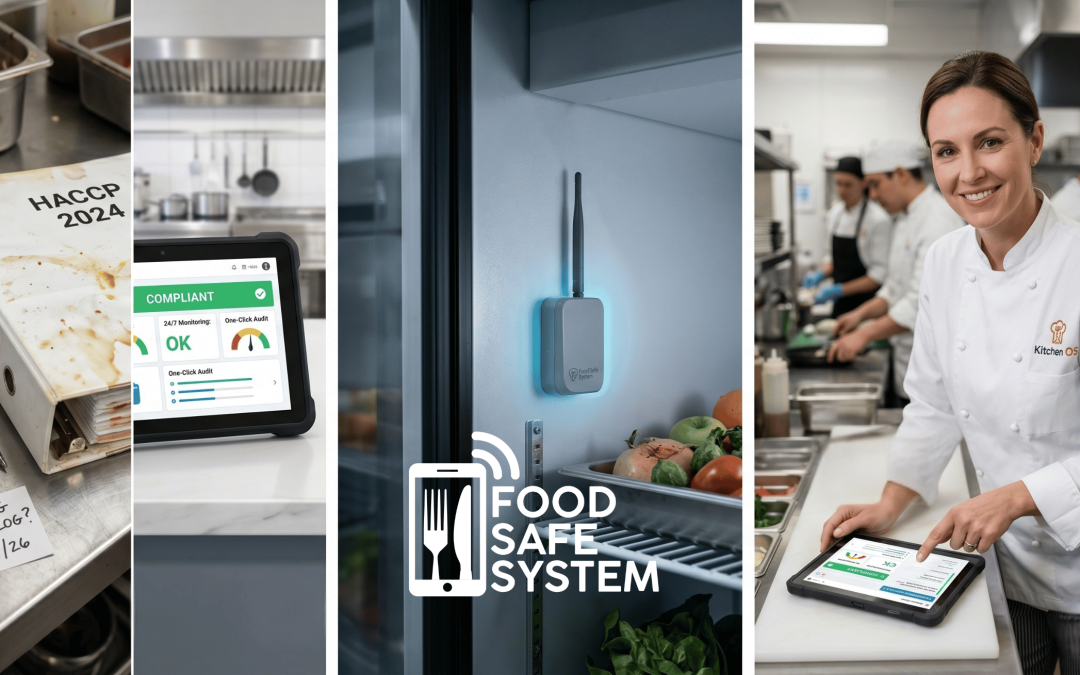
HACCP Plan Builder vs. Traditional Paper-Based HACCP: A Step-by-Step Guide
HACCP Plan Builder vs. Traditional Paper-Based HACCP: A Step-by-Step Guide For decades, the “HACCP Folder” has been a permanent fixture in professional kitchens—usually a bulging, grease-stained binder sitting on a shelf. But in a modern, fast-paced food business,…