Tuesday, Aug 11

Food Safety in Ireland: Why “I Have It in My Head” Is Not Enough Anymore
If you run a café, takeaway, or restaurant anywhere in the Republic of Ireland, you probably know your food safety inside out — in your head. You know what temperature your fridge should be, how long cooked chicken can be kept, and which allergen needs what label. The problem is: your Environmental Health Officer (EHO) can’t see inside your head. And in 2026, “I know what I’m doing” isn’t enough to keep you, your staff, or your customers fully protected.
1. Ireland is changing — and so are expectations
Ireland’s food scene has exploded in the last decade: street food, food trucks, dark kitchens, pop-ups, and family spots turning into Instagram destinations. With that growth comes more scrutiny — from councils, from customers, from social media, and from the law. EHOs aren’t trying to catch you out, but they’re under pressure to show that standards are being met, not just talked about.
So when they walk into your kitchen, they’re looking for one thing above everything else: evidence. Not “I know”, but “here’s the record”.
2. “I’ve been doing this 20 years” doesn’t stand up in court
Most Irish food business owners didn’t get into this for paperwork. You learned from your da, your aunt, a chef who taught you on the job. That experience matters. But in a recall, a complaint, or a court case, experience on its own doesn’t stand up.
What stands up is:
-
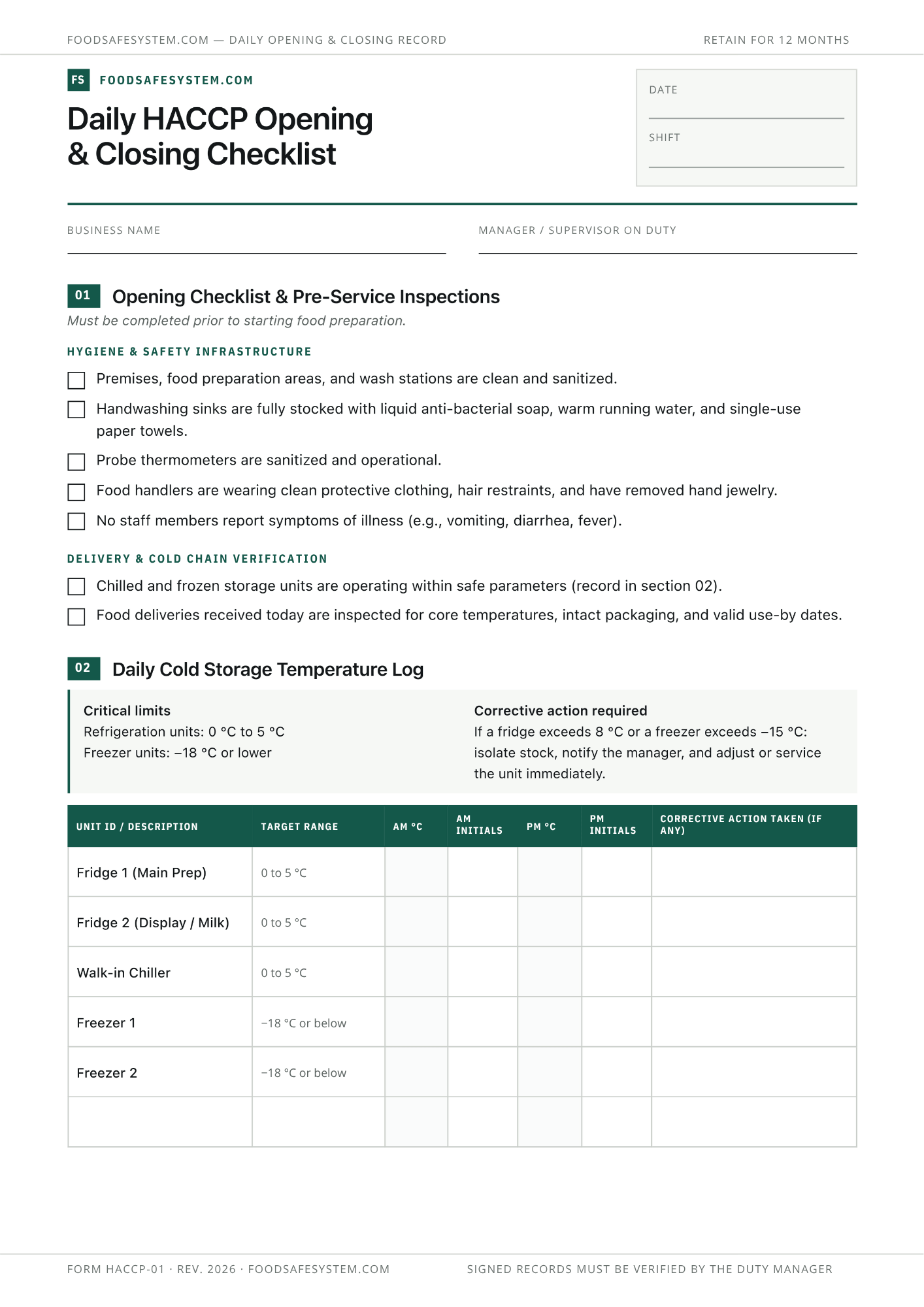
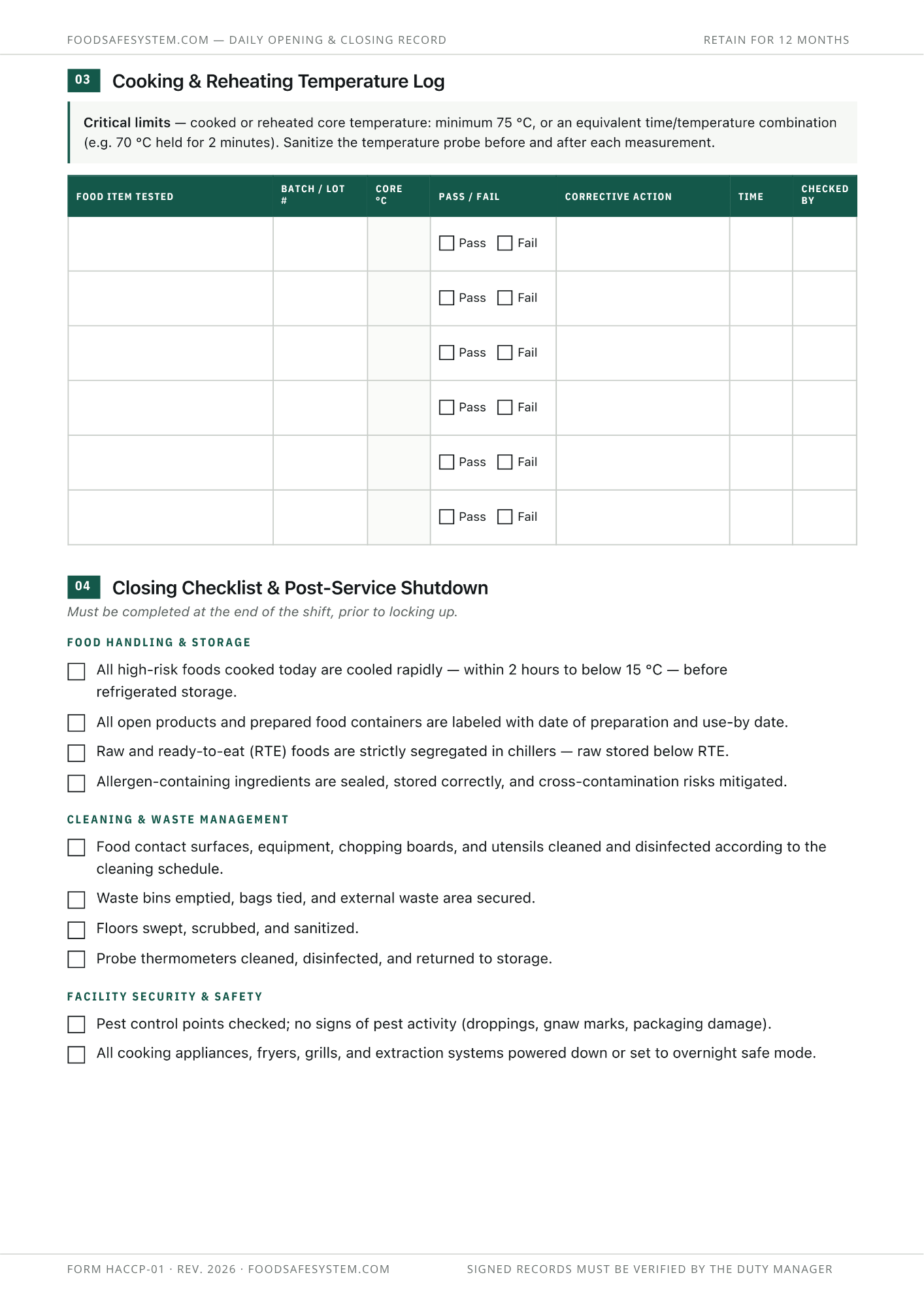
Temperature logs: filled in, legible, and consistent.
-
Cleaning schedules: that match what’s actually happening in the kitchen.
-
Allergen information: clear, updated, and shared directly with staff.
-
Training records: proof new staff weren’t just thrown onto the line.
If something goes wrong and all you have is “sure, we always do it that way”, you’re exposed.
3. EHOs want daily consistency, not inspection-day performances
A lot of Irish businesses still treat EHO visits like a school exam you can cram for. Panic clean, fresh labels on everything, stick a thermometer in the fridge five minutes before they walk in. Then hope for the best.
Modern EHOs aren’t interested in a performance. They want to see what your normal Tuesday looks like:
-
Are checks being done every day, or just on inspection week?
-
Can any staff member show them where things are recorded?
-
Is there a clear system for what happens when a check fails?
If everything depends on you — the owner or head chef — remembering, explaining, and defending, that’s a risk. For you and for them.
4. Memory fails under pressure
The Irish hospitality mindset is famously “we’ll manage.” And most days, you do. But people under pressure cut corners, forget, and make assumptions — especially in a hot, busy kitchen at 7pm on a Saturday.
Things that live only in your head are the first to go when:
-
A key staff member is off sick
-
You hire someone new and throw them in at the deep end
-
You’ve a mad week with a festival, match day, or big event
-
You’re wrecked and trying to do three things at once
Systems — paper or digital — aren’t about making things complicated. They’re about making the right thing the easy thing, even when you’re wrecked.
5. Documented records protect your reputation
Think about six months from now. You’re busy, someone complains about being unwell after eating with you, and an officer calls. Which version of that phone call do you want?
Version A: “Can you show us your temperature records, your allergen information for that day, and your cleaning logs?”
“…eh, we don’t really have those. But we’re grand, we never have any bother.”
Version B: “Yes, here’s the full record for that week. Here’s what we cooked, when, and who checked it. Here’s the corrective action we took when the fridge went down on Thursday.”
Same complaint, completely different outcome. Good records don’t just protect your customers — they protect your reputation, your staff, and the business you’ve poured your energy into.
6. From memory to records
For a lot of Irish businesses, the leap isn’t from “system” to “fancy system.” It’s from “it’s in my head” to “it’s written down somewhere.” That first step — writing it down, even on paper — is the one that matters most.
Digital tools just make that step easier to keep up with. A temperature check on a phone takes the same ten seconds as writing it on a clipboard — but it can’t be lost, smudged, or left blank with a shrug.
Key action areas to prioritise first
| Area | Why it matters | Essential record |
|---|---|---|
| Temperatures | Prevents bacterial growth and core cooking failures | Daily fridge/freezer logs and core cooking checks |
| Allergens | Protects customer health and ensures legal compliance | Updated written allergen declarations |
| Cleaning | Maintains hygiene standards beyond quick surface wipes | Daily/weekly signed cleaning schedules |
| Training | Proves staff are trained before joining the line | Onboarding and allergen training logs |
You don’t need to overhaul everything overnight. Start with the records that protect you most — temperatures, allergens, cleaning — and build from there. Your future self, standing in a kitchen at 7pm on a Saturday, will be glad you did.
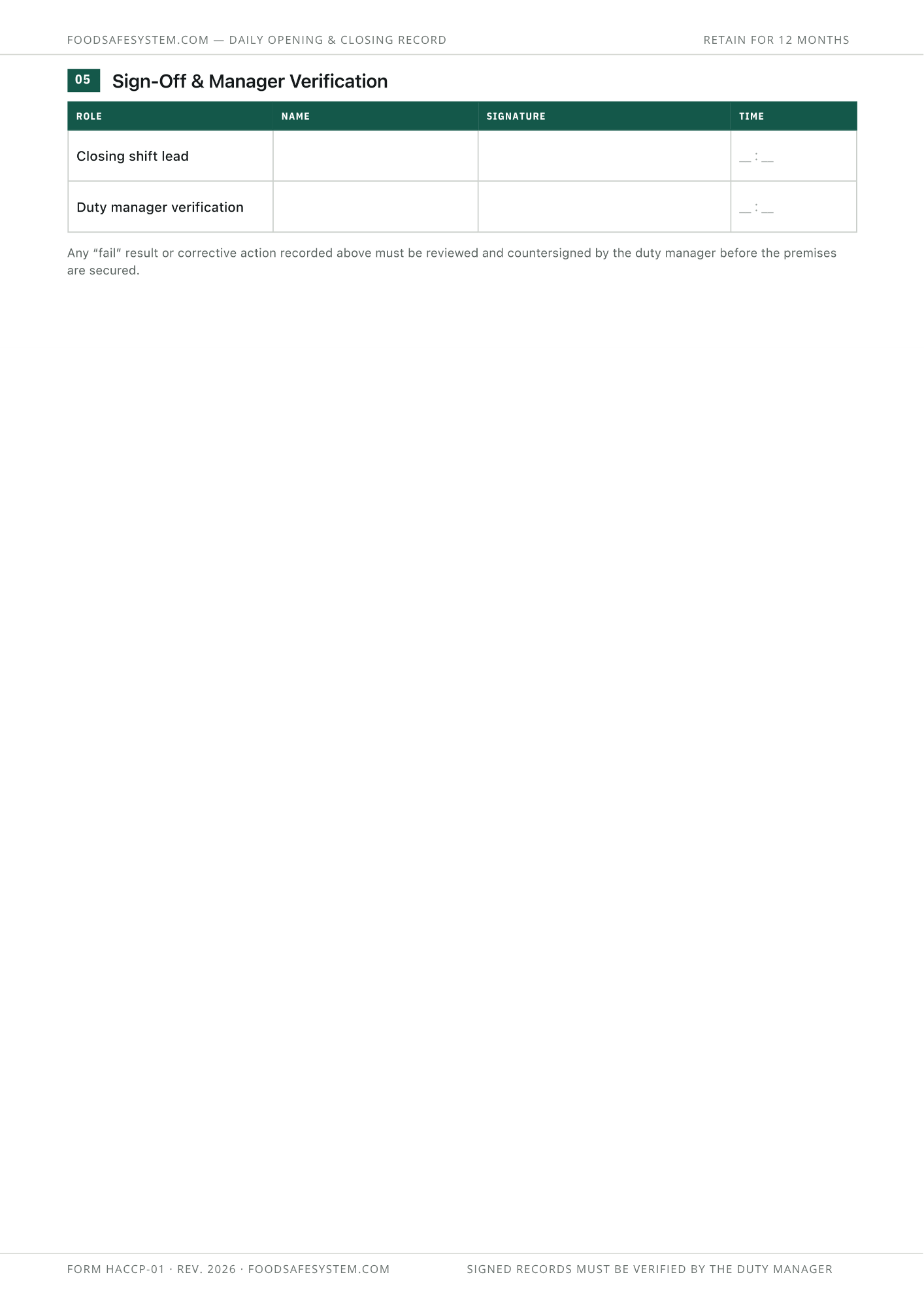
Download and save the images below
Do I need digital food safety records, or is paper enough in Ireland?
Paper is a legal starting point, but EHOs increasingly expect records that are timestamped, legible, and hard to backfill. Digital systems meet that bar automatically and are accepted under Irish and EU food hygiene regulations (Regulation (EC) No 852/2004).
What records actually hold up if there’s a complaint or inspection?
Temperature logs, cleaning schedules, allergen declarations, and staff training records — provided they’re consistent, dated, and completed daily rather than backfilled before a visit.
How long should I keep food safety records for?
Most Irish food businesses keep records for a minimum of 12 months, though your local EHO or HACCP plan may specify longer for certain checks. Food Safe System stores your history automatically so nothing gets lost.
Will switching from paper to digital slow my kitchen down?
No — a temperature check on a phone takes the same few seconds as writing it on a clipboard. The difference is it can’t be lost, smudged, or skipped without a record of it.
Book a demo
to see Food Safe System in action and get a tailored recommendation for your kitchen or group.
Not ready yet? See why more Irish kitchens are going digital first.
Why Food Safe System
Stay Compliant. Avoid Fines. Save Time.
Food Safe System automates your food safety records—so you’re always inspection-ready, without the paperwork hassle.
-
📲 Log temperatures, deliveries & checks from any device
-
🔔 Get alerts before anything goes wrong
-
🔒 Secure, cloud-based records for instant access during inspections
-
📉 Reduce risk of fines and failed audits
68% of major food safety issues are due to missing documentation. We fix that.
👉 Start your free trial today and take the pressure off compliance.
- Usability
- Durability
- Operating System
- Speed

5/5
With 5/5 stars, we are calling Food Safe System a solid Investment
Related Articles
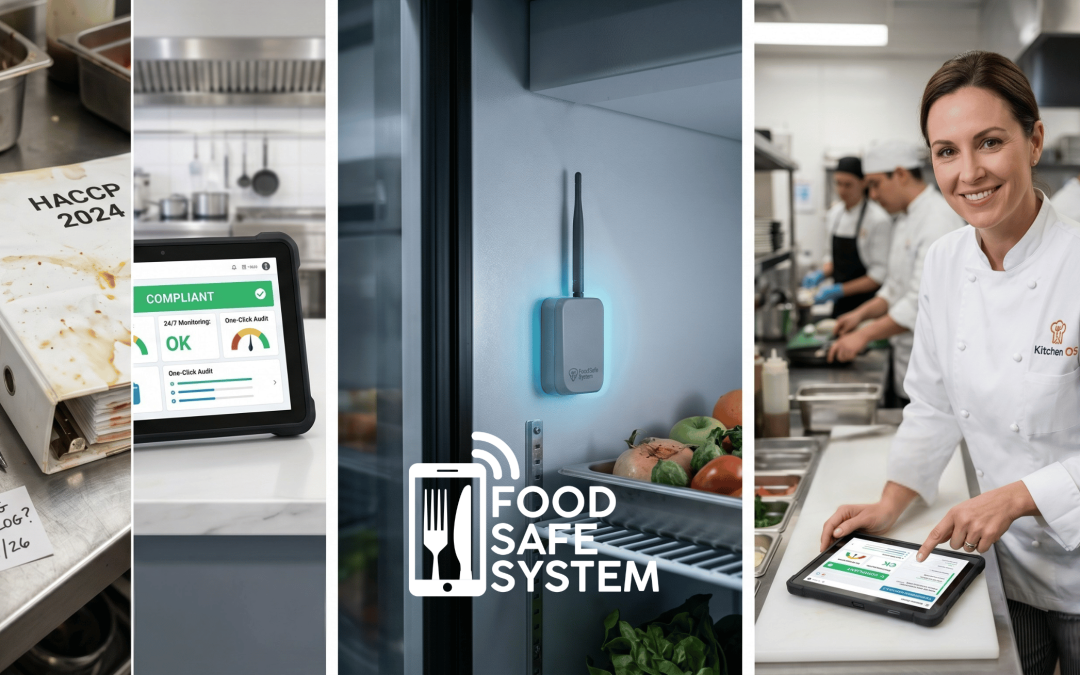
HACCP Plan Builder vs. Traditional Paper-Based HACCP: A Step-by-Step Guide
HACCP Plan Builder vs. Traditional Paper-Based HACCP: A Step-by-Step Guide For decades, the "HACCP Folder" has been a permanent fixture in professional kitchens—usually a bulging, grease-stained binder sitting on a shelf. But in a modern, fast-paced food business,...

Digital vs Paper Food Safety Systems: Pros, Cons + What to Choose
Paper logs are simple—but easy to miss, backfill, or lose. Here’s how digital food safety systems reduce risk with automated monitoring, alerts, and audit-ready records.
Digital vs Paper Food Safety Systems: Pros, Cons + What to Choose
Paper logs are simple—but easy to miss, backfill, or lose. Here’s how digital food safety systems reduce risk with automated monitoring, alerts, and audit-ready records.